
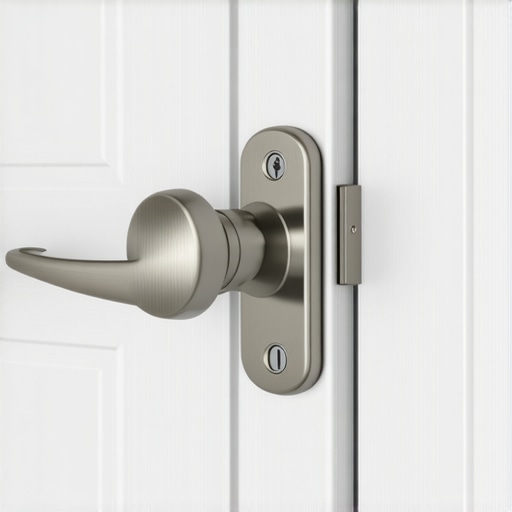
The Psychology of the Entry
Most homeowners believe a burglar is a master thief with a bag of specialized tools. In reality, most are opportunists looking for a weak point. They look for the plastic looking finish of a big box store deadbolt because they know it is made of zinc and pot metal. A thief knows that a cheap cylinder can be forced or bypassed in seconds. However, when a professional looks at a door, we see physics. We see the shear line, the pin stacks, and the spring tension. If you want to protect your home, you have to stop thinking about a lock as a piece of hardware and start thinking about it as a series of mechanical hurdles. A lady came into my shop crying because a scammer drilled her lock and charged her six hundred dollars for a fifteen dollar replacement. He told her it was a high security upgrade, but it was just more junk. I had to explain that if he had to drill a standard residential lock, he was not a locksmith. A real pro uses a Lishi or a pick set, not a power tool. This is why understanding the internal mechanics of your door hardware is the first step in real security. The specific reason anti-pick cylinders are worth the extra money is the dramatic increase in technical manipulation time.
“Security is always a trade-off between convenience and protection.” – Industry Axiom
Mechanism Zooming: The Physics of the Shear Line
To understand why you need an anti-pick cylinder, you have to understand how a standard pin-tumbler lock works. Inside that brass housing, you have five or six chambers. Each chamber contains a spring, a driver pin, and a key pin. When no key is inserted, the driver pins cross the shear line, preventing the plug from turning. When you insert the correct key, the bitting on the blade lifts the pins to the exact height where the gap between the driver and key pins aligns perfectly with the shear line. A picker uses a tension wrench to apply a slight rotational force, creating a tiny ledge at the shear line. As they lift the pins one by one, the driver pins get stuck on this ledge. In a cheap lock, the tolerances are so loose (often up to 0.005 inches) that the pins practically fall into place. High-security anti-pick cylinders reduce these tolerances to 0.001 inches or less. This means there is no room for error. If the pin is not perfectly placed, it will not set. This is a primary component of budget home security upgrades 2026 that actually make a difference.
The Role of Security Pins: Spools and Serrations
Anti-pick cylinders do not just use better tolerances; they use specialized driver pins. The most common is the spool pin. Imagine a pin shaped like an hourglass or a thread spool. When a picker tries to set this pin, the wider top or bottom of the spool catches on the shear line, creating a “false set.” The plug rotates slightly, making the picker think they have succeeded, but the pin is actually trapped. To get out of a false set, the picker must allow the plug to rotate backward, which often drops all the other pins they have already set. This back-and-forth battle can turn a thirty-second bypass into a twenty-minute ordeal. Serrated pins work similarly but have multiple tiny grooves that click as they pass the shear line. This provides false feedback to the picker, making it nearly impossible to tell which click is the real one. When you look at integrated home security lock bundles, ensure the physical cylinder includes these types of pins, as digital convenience means nothing if the mechanical override is weak.
ANSI Grades and Material Science
You cannot talk about security without talking about the American National Standards Institute (ANSI) and the Builders Hardware Manufacturers Association (BHMA). A Grade 3 lock is the bare minimum and is what you find at most hardware stores. A Grade 1 lock is a commercial-grade beast designed to withstand hundreds of thousands of cycles and significant physical abuse. The difference is often in the metal. Cheap locks use zinc or aluminum components that can be snapped with a heavy screwdriver. High-security cylinders use hardened steel inserts and solid brass plugs. When considering deadbolt installation DIY vs pro, remember that a pro knows how to reinforce the strike plate with three-inch screws that reach the wall studs. Even the best anti-pick cylinder is useless if the entire door frame can be kicked in with one hit. For those looking at 2026 smart lock trends for homes, the move is toward combining these heavy-duty physical materials with encrypted electronic access.
“A lock only keeps an honest man honest, but a security pin keeps a skilled man busy.” – Master Locksmith Proverb
Commercial Applications and Key Control
In the commercial sector, the stakes are higher. This is where commercial keyless entry benefits become obvious, but even these systems usually have a mechanical cylinder for emergency access. For offices, we often recommend push-button locks for offices or commercial panic exit devices 2026 standards. The key here is not just picking resistance but key control. Anti-pick cylinders often come with patented keyways. This means you cannot just go to a kiosk and get a copy made. You need a specialized card or authorization to get a duplicate. This prevents employee theft and unauthorized access. If you are comparing an automotive locksmith vs dealership for car key replacement, you will find a similar logic. The locksmith focuses on the integrity of the transponder and the physical cut, while the dealership often just wants to sell you a new ECU. The same applies to your office security. High-security cylinders like those from Medeco or Mul-T-Lock use secondary locking mechanisms, like a sidebar or a rotating pin, which adds another layer of physics that a standard pick cannot manipulate.
The 2026 Security Landscape
As we move into 2026, the lines between physical and digital security are blurring. We are seeing more keyless entry systems pros and cons debated in the trade. The pros are obvious: no keys to lose, easy code changes, and audit trails. The cons are often the mechanical bypass. If your smart lock uses a cheap five-pin Kwikset-style cylinder as a backup, a thief will ignore the encryption and just pick the lock. This is why I always tell my customers to invest in a smart lock that features a high-security cylinder. If you are looking for automotive key programming near me, you are already thinking about the digital side of things, but do not forget the physical side. Whether it is your car or your front door, the metal matters. Proper maintenance is also key. Never use WD-40 in a high-security cylinder. It attracts dust and creates a gummy mess that ruins the tight tolerances. Use a dry PTFE or graphite-based lubricant to keep those spool pins moving freely. Real security is a long-term commitment to quality hardware and professional installation. It is about making your home the hardest target on the block so the predator moves on to easier prey.