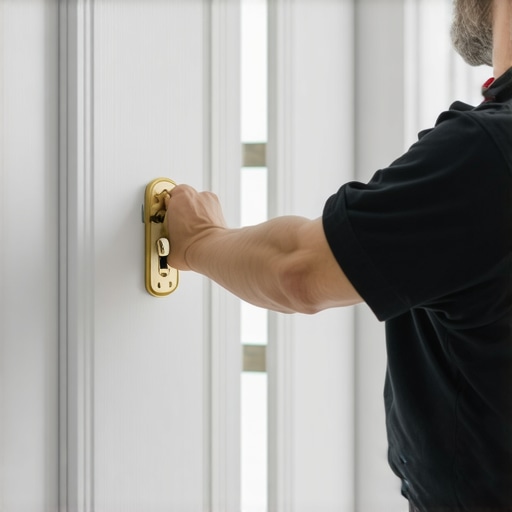
The Aftermath of the Breach: A Real-World Security Failure
A lady came into my shop crying last week because a scammer drilled her locks and charged her six hundred dollars after a burglary. She was vulnerable, and instead of a professional, she got a ‘trunk slammer’ who destroyed her hardware rather than servicing it. As a locksmith with twenty-five years at the bench, seeing these ‘technicians’ ruin a door with a cordless drill makes my blood boil. Security isn’t about how much force you can apply; it’s about the physics of the cylinder and the integrity of the metal. When your home has been violated, the last thing you need is a fly-by-night operator compromising your safety even further. You need a forensic approach to rekeying that accounts for the evolving threats of 2026.
“Security is always a trade-off between convenience and protection.” – Industry Axiom
Step 1: Signs of Tampered Locks Detection and Forensic Audit
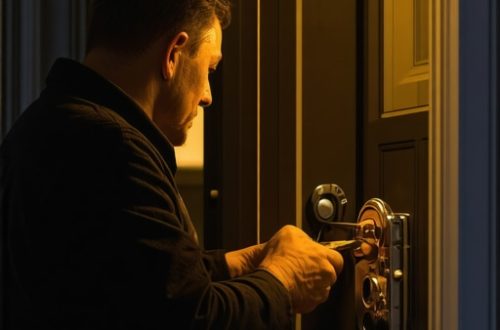
Before you even think about sliding a follower through a cylinder, you must understand how the breach occurred. I start every post-burglary call by examining the keyway under a 10x jeweler’s loupe. In 2026, burglars aren’t just using crowbars; they’re using sophisticated bump keys or even electronic interceptors for smart deadbolts with fingerprint scanners. Look for ‘witness marks’—tiny vertical scratches on the face of the plug or fresh brass shavings inside the keyway. If the lock was bumped, the top pins (the drivers) will often have flattened tips. If it was picked, the warding will show unusual wear. This audit determines if the hardware is still structurally sound or if the shear line has been compromised by forced rotation. Zinc-alloy ‘Big Box’ locks often warp under tension, meaning a simple rekey won’t fix the fact that the housing is now oval-shaped, leading to a ‘crunchy’ turn that will eventually leave you locked out.
[image_placeholder]
Step 2: Deep Mechanism Zooming – The Physics of the Rekey
Rekeying is the process of changing the internal pin configuration so old keys no longer function. But in my shop, we don’t just ‘drop pins.’ We analyze the tolerances. Most standard residential locks operate on a .015-inch or .021-inch increment system. When I pull the plug from a cylinder, I’m looking at the interaction between the bottom pins (the key pins) and the master wafers if a master key system was previously in place. After a burglary, I strip the cylinder entirely. I check the springs—if they’re compressed or tangled, the tension on the stack is uneven, making the lock easier to pick. I replace the old brass pins with nickel-silver pins where possible, as they resist wear and provide a crisper ‘click’ at the shear line. We ensure the stack height is perfectly flush with the top of the plug; even a .003-inch deviation can cause the lock to bind over time, especially in urban environments where grit and pollution enter the keyway.
Step 3: Evaluating Hardware Grades and Strike Plate Integrity
If you’re still using an ANSI Grade 3 lock from a bargain bin, you might as well secure your door with a rubber band. After a break-in, you must upgrade to ANSI Grade 1 hardware. The difference is in the material science. Grade 1 deadbolts feature a solid brass or steel bolt with a hardened steel roller pin inside. This roller pin is a nightmare for hacksaws because it spins when the blade hits it, preventing the cut. However, the lock is only as strong as the frame. Most burglars don’t pick locks; they kick doors. I always replace the standard one-inch wood screws in the strike plate with three-inch hardened steel screws that anchor directly into the wall studs. If your locksmith doesn’t check the gap between the door and the jamb, they aren’t doing their job. A flush fit is mandatory to prevent prying attacks.
“High-security cylinders are defined by their resistance to both surreptitious entry and physical force.” – ANSI/BHMA Standards Manual
Step 4: Navigating 2026 Wireless Lock Protocols and Smart Ecosystems
Modern security involves more than just mechanical pins. For those integrated into a locksmith for smart home ecosystems, we have to look at the digital ‘keys.’ If your home was breached, you must revoke all digital certificates and update your 2026 wireless lock protocols. We’re seeing a move toward Matter and Thread-based systems which offer better encryption, but they still rely on physical overrides. A common mistake is ignoring the key fob battery replacement guide; low voltage in a smart lock can lead to ‘fob-skipping’ where the motor fails to fully engage the deadbolt, leaving the door technically unlocked while the app says it’s secure. We audit the software logs to see if a digital bypass occurred, ensuring your touchless entry systems for offices or homes haven’t been cloned.
Step 5: Transparency in Professional Costs and Local Context
People always ask about the cost of hiring a professional locksmith in 2026. In dense urban areas, you’re looking at a service call fee ranging from $75 to $150, plus the labor for rekeying, which usually runs $25 to $50 per cylinder. If a company quotes you $15 on the phone, hang up. That’s the bait-and-switch. They will show up, tell you your lock is ‘un-pickable,’ and drill it out, charging you $800 for a replacement lock that I sell for $40. Real security is an investment in metal and expertise. Especially in humid climates, where wood doors swell and contract, a professional must ‘time’ the lock so the bolt throws smoothly without friction. If you have to pull or push on the door handle to turn the key, the lock is under lateral load, which will eventually snap the tailpiece.
Maintenance: Beyond the Rekey
Once the rekey is complete and your home is secure, stop using WD-40. It’s a solvent, not a long-term lubricant; it attracts gunk that turns into a grinding paste inside your cylinder. Use a dry PTFE-based spray or high-grade graphite. Security isn’t a ‘set it and forget it’ situation. It’s a constant battle against entropy and the folks who want what you have. Keep your keys off social media (yes, people can decode a key from a photo) and trust your local brick-and-mortar smith.



This article brings up some really important points about the depth of security that needs to be maintained post-burglary. I’ve dealt with similar situations in urban settings where I learned that even high-grade locks can be compromised if the frame isn’t reinforced properly. The mention of smart lock protocols is especially relevant today, as many homeowners overlook the subtle vulnerabilities in digital systems. One thing that struck me is the emphasis on forensic audits—detecting tool marks and tampering signs can save a lot of guesswork and future problems. I’ve noticed that modern burglars often combine traditional methods with electronic tools, so a comprehensive approach is more necessary than ever. Has anyone found effective ways to preemptively identify these vulnerabilities before a breach happens, perhaps through routine inspections or technological monitoring? It seems like combining physical and digital security measures offers the best protection, but I’d love to hear more about practical strategies to keep ahead of increasingly sophisticated threats.