![5 Urgent Signs You Need to Change Your Door Locks Immediately [2026]](https://prolocksmithco.com/wp-content/uploads/2026/03/5-Urgent-Signs-You-Need-to-Change-Your-Door-Locks-Immediately-2026.jpeg)
The Anatomy of Vulnerability: Why Most Homeowners Fail the First Test
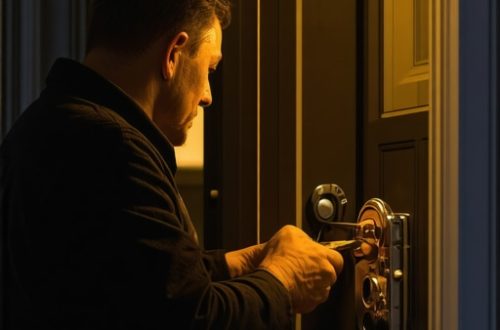
Burglars don’t look at your door the way you do. You see a painted surface and a familiar handle; they see a physics problem involving leverage points and low-grade metallurgy. I have spent 25 years in this trade, and I can tell you that most ‘deadbolts’ sold at big-box retailers are effectively toys made of pot metal. When I walk a property, I’m looking at the strike plate screws, the cylinder’s shear line, and the gap between the door and the frame. If you aren’t paying attention to these physical realities, you’re just providing a suggestion of security, not the actual thing.
A lady came into my shop crying last Tuesday because a ‘trunk slammer’ scammer—one of those guys with a $29 service call ad—had drilled out her high-security cylinder for a simple lockout and then charged her $600 for a replacement lock that wasn’t worth ten bucks. It breaks my heart because it’s a double violation: the lock failed to protect her wallet, and the technician failed to protect her home. This is why understanding the forensic health of your hardware is critical. You don’t wait for the brakes to fail on your car before you change the pads; you shouldn’t wait for a snap in the night to realize your deadbolt is compromised.
“Security is always a trade-off between convenience and protection.” – Industry Axiom
1. The Mechanical Grinding and Internal Metal Fatigue
If you feel a ‘crunch’ when you turn your key, you are experiencing the microscopic disintegration of your lock’s internal components. Inside a standard pin-tumbler lock, you have a series of brass or nickel-silver pins sitting on tiny springs. These pins must align perfectly at the shear line—the exact point where the plug can rotate within the housing. When these pins wear down, they create ‘brass dust’ inside the chamber. This debris acts like sandpaper, further grinding down the tolerances. Eventually, the spring tension will fail, or a pin will become jammed in the ‘down’ position, leading to an emergency residential lockout solution that usually involves destructive entry if the lock is frozen. If your key requires a ‘jiggle’ or a specific ‘lift’ to turn, your deadbolt is screaming for retirement. We are talking about tolerances measured in thousandths of an inch; once those are gone, the security of the lock is non-existent.
2. The ‘Ghost Key’ Problem: Loss of Key Control
If you have lived in your home for more than three years and haven’t changed the cylinders, you effectively have no idea who has a key. Think about the previous owners, the contractors, the dog walkers, and the neighbors. For my business clients, this is even more dangerous. Without commercial restricted keyways, any employee can take a key to a hardware store and have a duplicate made for two dollars. These restricted systems use patented key blanks that aren’t available at kiosks. I tell my clients that if you can’t account for every piece of metal that operates your door, you don’t have a secure building. For those managing short-term rentals, electronic locks for Airbnb properties are the only logical path forward. They allow you to revoke access digitally, removing the physical risk of a copied key entirely.
3. Visible Material Degradation and Weathering
In our region, the humidity and salt air do a number on hardware. Look at the cylinder face. Is it pitted? Is there green oxidation (verdigris) forming around the keyway? This isn’t just cosmetic. This corrosion migrates into the pin chambers. When moisture gets trapped behind the scalp of the lock, it causes the steel springs to rust and lose their elasticity. A spring that cannot push the driver pin back into the housing means the lock can be vibrated open with a simple bump key or a battery-operated pick gun. If your hardware looks like it belongs in a museum, it’s not doing its job. Modern integrated home security lock bundles utilize weather-sealed gaskets and PVD finishes that resist this forensic decay, ensuring the internal physics remain crisp for decades.
“The strength of a lock system is only as great as the weakest link in the door assembly.” – ANSI/BHMA Security Standards
4. Structural Shifting and Misalignment
A lock is only as good as its engagement with the frame. If you have to pull or push on your door to get the bolt to throw, you are putting lateral pressure on the bolt’s tailpiece. Most residential deadbolts use a thin cast-zinc tailpiece that connects the thumbturn to the bolt. Under constant stress from a misaligned door, that tailpiece will eventually snap, often while the bolt is in the locked position. This leads to a key extraction for deadbolts scenario or a complete drilling requirement. Furthermore, if the bolt doesn’t fully extend into the strike plate, the ‘deadlock’ feature—a small bar that prevents the bolt from being shimmed or ‘loided’ with a credit card—won’t engage. You might think you’re locked, but a burglar with a flat-head screwdriver can retract that bolt in three seconds.
5. Outdated Security Logic and Compliance Failures
Technology moves fast. What was ‘secure’ in 1995 is a joke to a modern thief with a YouTube connection. If your office still uses old-school master key systems without push-button locks for offices, you are vulnerable to simple picking techniques. For commercial spaces, you also have to worry about life safety codes. If your exit hardware doesn’t meet fire-rated panic hardware options, you aren’t just at risk of theft; you’re at risk of a massive liability lawsuit. I also see many ‘vintage’ cars where the owner is struggling with a worn-out ignition. Finding a locksmith for vintage car keys who understands the wafer-tumbler systems of the 1970s is getting harder. If you’re forcing that thin metal key into a 50-year-old ignition, you’re one turn away from a snapped blade and a very expensive tow. Upgrading to a commercial master key system provides advantages for businesses that go beyond just locking doors; it organizes your entire security hierarchy.


![5 Toughest Front Door Locks for 2026 Home Security [Tested]](https://prolocksmithco.com/wp-content/uploads/2026/03/5-Toughest-Front-Door-Locks-for-2026-Home-Security-Tested-75x75.jpeg)