The Anatomy of a Failing System
I teach my apprentices that if you have to force the key, you’ve already lost the battle against physics. This is a technical wisdom I’ve passed down for over two decades in my shop. When a hotel manager tells me their master key is ‘sticky,’ I don’t see a lubrication issue. I see a failing mechanical ecosystem. In 2026, as hospitality moves toward mobile app locksmith booking 2026, the underlying mechanical foundation of a master key system is often neglected. This neglect leads to what we call ‘phantom keys’ and ‘cylinder fatigue.’ Most people think a lock is a static object, but inside that brass housing, it is a high-speed game of tolerances. When you have a master key system, you are introducing master wafers into the pin stacks. These tiny discs of metal create multiple shear lines. If you don’t calculate the math correctly, you end up with a ghost key from another room opening the bridal suite. That is not a glitch; that is bad locksmithing.
“Security is always a trade-off between convenience and protection.” – Industry Axiom
1. The Phantom Key Phenomenon
The first and most dangerous mistake hotels make is ignoring the math of the Maximum Adjacent Cut Specification, or MACS. When designing a system for multi-family building lock rekeying or large-scale hotels, the difference between the depth of one cut on a key and the cut right next to it cannot be too great. If you ignore MACS, the pins in the cylinder will bind or, worse, the master wafers will become so thin they flip sideways inside the chamber. I have seen ‘trunk slammers’ install systems where a guest key for room 204 could open room 308 because the wafers were so worn they created an accidental shear line. In 2026, with the rise of 2026 smart lock trends for homes and hotels, people assume electronics fix this. They don’t. The mechanical override is still the primary point of failure.
2. Cheap Zinc Die-Cast Hardware
I despise big-box hardware. Hotels trying to save a buck often install zinc-based interchangeable cores. Zinc is a soft metal; it has a low melting point and even lower structural integrity. When you are running a high-traffic commercial building, you need solid brass or nickel silver. A master key system is only as strong as its thinnest wafer. If those wafers are made of cheap alloy, they will mushroom under the constant strike of the key. This leads to the ‘crunchy’ feel when turning a lock. If you are looking at electronic locks for Airbnb properties or hotel rooms, ensure the physical cylinder is at least an ANSI Grade 1. Don’t let a slick interface distract you from the pot-metal garbage inside the door.
3. The ‘Master Key for Everything’ Fallacy
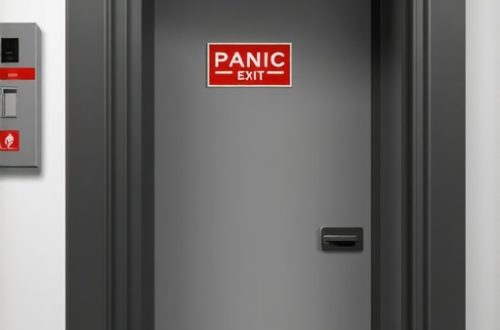
Convenience is the enemy of security. I once walked into a facility where the master key opened the guest rooms, the pharmacy, and the server room. That is a security nightmare. A properly tiered system uses ‘maisoning’ sparingly. You need a Great Grand Master, a Grand Master, and then sub-masters for specific floors. In the context of panic bar installation and repair for commercial buildings, the master key system must also account for egress. If your master system is so complex that it slows down the rotation of the plug, you are risking lives during a fire. A real locksmith understands that every master wafer you add reduces the number of unique key changes available. By the time you get to the fifth level of mastering, you’ve essentially created a lock that can be opened by a stiff breeze and a toothpick.
“A master key system is a mathematical puzzle where every solution creates a potential vulnerability.” – Security Manual
4. Neglecting Key Control and Record Keeping
In 2026, if you aren’t using restricted keyways, you don’t have a master key system; you have a suggestion. Standard keys can be duplicated at any kiosk. I tell my clients that if a key says ‘Do Not Duplicate,’ it’s just a polite request that most people ignore. You need patented keyways where the blanks are not available to the public. When we handle 24/7 mobile locksmith for apartments or hotels, we maintain strict records of the biting codes. If you lose track of who has the Grand Master, you don’t just have a lockout; you have a total system compromise. This is where integrated smart lock hubs 2026 come into play, allowing you to track digital ‘keys’ alongside the physical ones. But if the physical record is a mess, the digital one won’t save you.
5. Failing the Weather and Wear Test
Hardware in 2026 has to deal with more environmental stress than ever. Whether it is a mobile locksmith for RVs and campers dealing with road salt or a hotel on the coast dealing with humidity, the metal expands. A master key system has tighter tolerances than a standard lock. If the door isn’t hung straight, the side load on the bolt transfers to the cylinder. This creates ‘binding’ on the master wafers. If your hotel staff has to jiggle the key to get it to work, the wafers are already being shaved down. Eventually, that brass dust will gunk up the springs, and you’ll be calling for an auto lockout or a building-wide rekey at 2 AM. Use a high-quality synthetic lubricant, not graphite. Graphite clogs the tight tolerances of a master system. Stick to what the pros use.
Securing the Future
The psychology of a thief is simple: they look for the path of least resistance. Usually, that is a poorly maintained lock or a key left under a mat. For hotels, the threat is often internal. High-quality anti-pick locks for front doors 2026 are great, but if your master key system is mathematically compromised, picking isn’t even necessary. Security involves trust in the hardware and the person who pinned it. Don’t trust your multi-million dollar property to a guy with a drill and a van. Trust the bench tech who knows the physics of the shear line. Your peace of mind is worth the extra cost of brass over zinc.