4 Best Fire-Rated Panic Hardware Options for 2026 Safety Audits
I teach my apprentices that if you have to force the key, you have already lost. This technical wisdom applies double to commercial exit devices. I have been at the bench for over two decades, and I have seen what happens when building managers try to save fifty dollars on a fire exit. In a fire, the metal expands. If your panic bar is made of cheap zinc or pot metal from a big box store, that latch will bind in the strike plate and trap people inside a furnace. Safety audits for 2026 are becoming significantly more stringent regarding the structural integrity of fire-rated assemblies. You cannot just slap any bar on a door and call it compliant. Real security is a physics problem, not a budget line item. When we perform business access control audits 2026, we look at the metallurgical composition of the latch bolt and the cycle-count rating of the return springs. If the hardware does not meet the UL 10C standard for positive pressure fire tests, it is scrap metal as far as I am concerned.
“Panic hardware shall be listed and shall be tested in accordance with UL 305.” – ANSI/BHMA A156.3
The Mechanics of Fire-Rated Exit Hardware
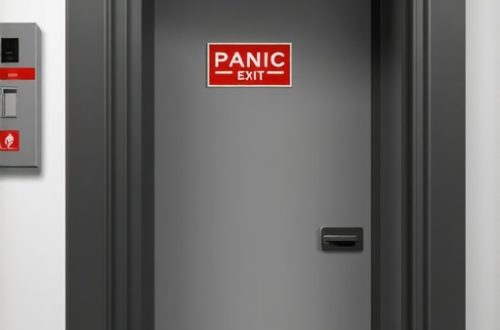
In my shop, we take these devices apart to see what makes them tick. A fire-rated panic bar differs from a standard panic bar because it must lack a mechanical dogging feature. Dogging is the ability to hold the push bar down so the latch stays retracted. In a fire door, the door must latch every single time it closes to maintain the fire barrier. This is non-negotiable for 2026 safety compliance. The internal chassis of a high-end device like a Von Duprin 99 is a masterpiece of mechanical engineering. It uses a fluid damper to decelerate the push bar, reducing wear on the axle pins and ensuring the 3/4 inch throw dead-locking latch bolt engages the strike with surgical precision. Most failures occur because the vertical rods in surface-mounted systems get bent by delivery carts, or the internal compression springs lose their tension after years of abuse. We look for hardware that uses stainless steel components rather than plastic bushings which melt at the first sign of heat.
1. Von Duprin 98/99 Series: The Gold Standard
The Von Duprin 99 is the tank of the industry. It is a wide-stile rim device that has been the backbone of commercial security for decades. For 2026 audits, the 98/99 series remains a top pick because of its incredibly high cycle life. When we talk about high-security locks vs standard locks comparison, the Von Duprin wins on pure mass. The internal mechanism uses a heavy-duty coil spring and a dual-pivoting latch. This prevents ‘latch bounce,’ where a door might bounce off the strike and stay slightly ajar. For multi-family building lock rekeying projects, these devices can be fitted with high-security euro cylinder locks or rim cylinders that utilize patented keyways to prevent unauthorized duplication. The fire-rated version is designed to withstand temperatures exceeding 1,800 degrees Fahrenheit without the latch failing. This is the hardware you install when failure is not an option.
2. Sargent 80 Series: The Heavy-Duty Contender
Sargent makes a device that I often recommend for school districts and hospitals. The 80 series features a low-profile design that reduces the chance of snagging. From a locksmithing perspective, the Sargent is a dream because the chassis is accessible for maintenance without requiring a total teardown. During business access control audits 2026, we often find that Sargent units integrated with electrified trim are the most reliable for high-traffic entry points. They offer an ‘ET’ trim that allows for easy integration with business key management software, allowing you to track who enters and when. The fire-rated 12-8800 rim device is particularly robust, utilizing a through-bolted design that ensures the device stays attached even if the door core begins to degrade under extreme heat.
“Security is always a trade-off between convenience and protection.” – Industry Axiom
3. Corbin Russwin ED5000: Precision Engineering
The ED5000 is often my go-to for architects who want a specific aesthetic without sacrificing the ANSI Grade 1 rating. The physics of the ED5000 focus on a smooth, short-throw push bar. This requires less force to operate, which is critical for ADA compliance while maintaining fire-rating integrity. We often see these paired with high-tech lock bumping prevention cylinders. Because the ED5000 uses a heavy-duty plated steel chassis, it resists the warping that usually kills cheaper aluminum bars. If you are managing a facility where the doors are subject to high wind loads or pressure differentials, the Corbin Russwin latching mechanism provides a more secure ‘bite’ on the strike plate, preventing the door from rattling or popping open during a storm.
4. Detex Advantex: The High-Security Specialist
Detex is known for its alarm systems, but the Advantex series is a powerhouse of fire-rated hardware. This is the option for businesses that need integrated security. The Advantex can be equipped with an internal high-decibel alarm and a solar-powered smart locks 2026 kit for perimeter gates that lack hardwired power. This brings us to a critical point in modern safety: EV charging station lock security. We are seeing more requirements for fire-rated hardware in enclosures housing large battery arrays. The Detex hardware is rugged enough to handle outdoor exposure while maintaining the strict latching requirements of a fire-rated assembly. The stainless steel dead-latching bolt is nearly impossible to shim, providing a level of physical security that matches its fire-safety rating.
Integrating Modern Access Control in 2026
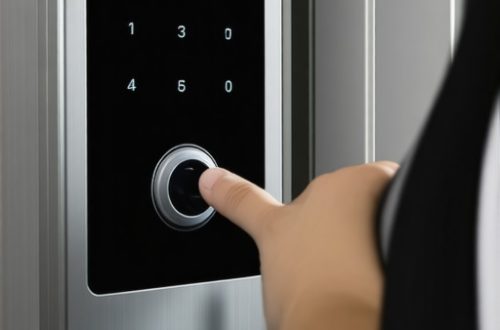
The 2026 safety audits are not just about the metal: they are about the data. We are seeing a massive shift toward keyless entry systems pros and cons. The pro is obvious: you can revoke access instantly. The con is that many electronic strikes are not fire-rated. You must ensure that your electrified panic hardware uses a fail-secure solenoid if it is on a fire door, or more commonly, you use electrified trim that keeps the mechanical latching intact. When I perform a business access control audit, I check the power supply for the hardware. If the backup battery is dead, your high-tech system is just an expensive paperweight. I always recommend keeping a physical key override using a high-security cylinder. A quick key fob battery replacement guide should be part of your standard operating procedure, as dead fobs lead to employees propping doors open, which is a massive fire code violation.
Maintenance and Longevity
The biggest mistake people make is using the wrong lubricant. I see it every week: someone sprays WD-40 into a panic bar and six months later the internal sliders are gummed up with a sticky paste of dust and old oil. Use a high-quality PTFE-based dry lubricant. This keeps the pins and springs moving without attracting the grit that acts like sandpaper on the brass bushings. During a multi-family building lock rekeying, we often find that the exit devices have never been serviced. A yearly drop of lubricant on the latch pivot and a check of the mounting bolts can extend the life of a Von Duprin or Sargent device by twenty years. If the hardware starts to ‘crunch,’ it means the bearings are shot or a spring has snapped. Do not wait for the audit to fail. Fix the hardware when it starts talking to you.
The Verdict on 2026 Compliance
Securing a commercial building is about layers. You start with the fire-rated panic hardware to ensure life safety. You layer on high-security euro cylinder locks to prevent picking and bumping. You manage it all with business key management software to maintain key control. Whether you are looking at solar-powered smart locks 2026 or traditional mechanical bars, the goal is the same: a door that opens when it must and stays shut when it should. Trust a locksmith who has seen these devices fail in the field. Cheap hardware is a liability that costs more in the long run than the most expensive Sargent or Von Duprin device on the market. Get it done right the first time, and you will not have to worry when the fire marshal walks through your front door.