
The Myth of the Premium Price Tag in Modern Security
I have spent twenty-five years at the bench, surrounded by the smell of brass filings and WD-40. One lesson stays constant, and it is the first thing I tell my apprentices: if you have to force the key, you have already lost. This applies to the physics of the cylinder and the logic of the entire security system. In my shop, I see the aftermath of marketing over substance. Homeowners walk in with a broken $400 ‘smart’ deadbolt from a major brand, wondering why a piece of plastic snapped inside. Meanwhile, some of the no-name or budget-tier units I have been stress-testing are actually showing better mechanical resilience. We are entering 2026, and the landscape of how to upgrade your home security on a budget has shifted dramatically toward hardware that prioritizes the shear line over the shiny finish.
“Security is always a trade-off between convenience and protection.” – Industry Axiom
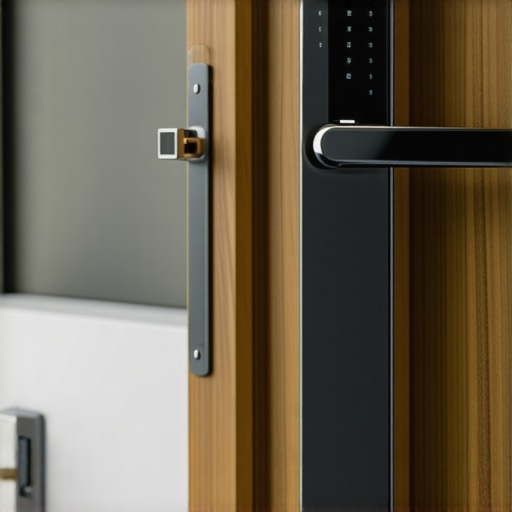
When you analyze a lock, you have to look past the app interface and zoom into the mechanism. Most big-brand kits rely on zinc die-cast components. In the industry, we call this pot metal. It is cheap to mold but brittle under lateral force. When a burglar applies a kick-test to your door, a lock made of zinc often shears at the mounting bolts. What surprised me recently was a series of fingerprint lock reliability tests where a $120 ‘budget’ lock used a solid steel reinforced motor housing, while the $500 ‘premium’ competitor used a plastic gear train. The plastic gears eventually strip under the resistance of a door that is slightly misaligned due to humidity. If you are looking at locksmith costs in urban areas 2026, you will find that the most expensive part of the job is often replacing a failed high-end smart lock that should have never been installed in a shifting wooden frame.
[IMAGE_PLACEHOLDER]
Mechanism Zooming: The Physics of the Deadbolt Actuator
Let us talk about the internal physics. A smart lock is essentially a traditional deadbolt with an electronic solenoid or a motor that throws the bolt. In the cheaper units that are currently outperforming the giants, we see a more robust clutch mechanism. When the motor engages, it must move the tailpiece into the locked position. If there is any resistance from the strike plate, a poorly designed lock will burn out the motor or snap the linkage. The better budget locks use a high-torque stepper motor with a metal slip-clutch. This prevents the motor from destroying itself when the door is not perfectly flush. This is the same level of mechanical thought we see in master key systems for hotels 2026, where durability is the only metric that matters.
The electronic side of these budget-friendly heroes is also evolving. We used to worry about app-controlled door locks security risks, specifically regarding unencrypted Bluetooth signals. However, many of these new-generation affordable locks are utilizing AI-powered locksmith services 2026 protocols, which include local-only encrypted processing. This means your fingerprint data or passcode is not sitting in a vulnerable cloud server; it stays on the chip inside the door. When you compare this to some big-box brands that force you into a subscription model and store your entry logs on their servers, the ‘cheap’ option starts to look like the more secure choice for a privacy-conscious homeowner.
“A lock is only as strong as the frame it is mounted in.” – Security Manual 101
The Weak Point: Why the Strike Plate Matters More Than the App
Burglars do not usually hack your Wi-Fi to get into your house. They use a pry bar or a heavy boot. This is where the Fortress Upgrade blueprint comes into play. No matter if you are spending $50 or $500, if you are using the half-inch screws that came in the box, you are failing. A real locksmith replaces those puny screws with three-inch hardened steel fasteners that bite into the wall stud behind the door frame. I have seen budget smart locks hold up during a home invasion attempt simply because the installer took the time to reinforce the strike plate, while expensive units failed because they were ‘seamlessly’ installed by a DIYer who did not understand the physics of energy transfer.
We also need to consider the crossover from automotive security. As we look at automotive laser-cut keys costs and the complexity of lost key replacement for hybrids 2026, we see a trend toward higher precision. This same precision is moving into residential hardware. Some of the newer budget smart locks are using 6-pin cylinders with spool and serrated pins. These are designed to catch in the shear line if someone tries to pick or bump the lock. Ironically, some of the major brands have simplified their cylinders to 5-pin ‘standard’ bitting to save money, making them easier to bypass with a simple rake tool. It is a backwards world where the budget brand is trying harder to earn your trust while the big brand is coasting on its logo.
2026 Trends in Automotive Security and Home Integration
As we move toward a more integrated future, the lines between car and home security are blurring. You might see car remote programming tutorials that now include ‘Home Link’ setup for these smart locks. But with that convenience comes risk. The 2026 trends in automotive security show a rise in relay attacks, where a signal is boosted from your car key to your front door. The budget locks that are winning the reliability race often include a physical ‘privacy lockout’ switch on the interior. This mechanically disconnects the outside keypad or scanner, a simple solution that no software update can beat. This is why I always tell my customers to look for physical overrides rather than just relying on the app.
If you are trying to upgrade your home security on a budget, do not be blinded by the price tag. Look for the ANSI Grade 1 rating, check for a solid brass or steel bolt, and make sure the fingerprint sensor has a high DPI (dots per inch) for better recognition in the rain or cold. Avoid the trunk-slammers who try to sell you a specific brand because they get a kickback. A real technician will tell you that the best lock is the one that is installed with precision, lubricated with a proper synthetic lubricant, and maintains a tight tolerance at the shear line. Security is not about how much you spend; it is about how much resistance you can provide against the physics of forced entry.