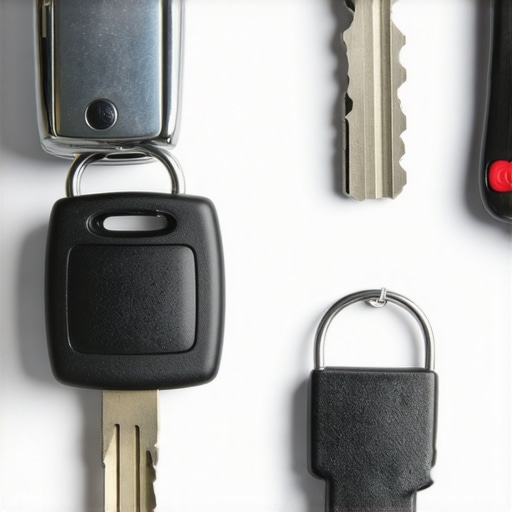
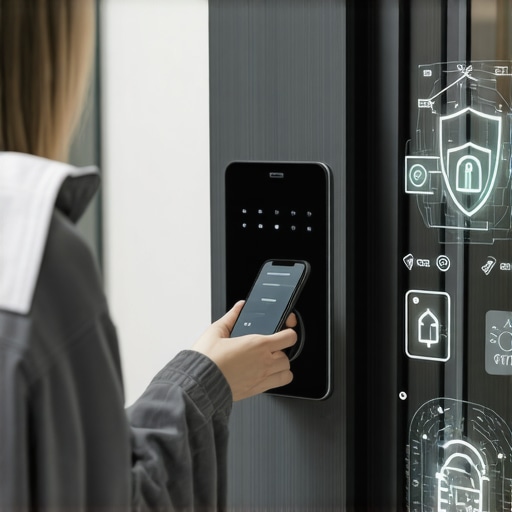
The Burglar Doesn’t Care About Your Tech Most folks think a burglar is some hooded figure with a set of picks, delicately tickling the pins of a lock until it clicks. That is movie garbage. In reality, a thief looks for the path of least resistance. They look at your door and they see a physics problem involving force and leverage. If your strike plate is held in by half-inch screws that only penetrate the decorative trim, it doesn’t matter if you have a thousand-dollar biometric scanner or a 2026 solar-powered smart lock. One good kick and the wood jamb…
4 Best Fire-Rated Panic Hardware Options for 2026 Safety Audits I teach my apprentices that if you have to force the key, you have already lost. This technical wisdom applies double to commercial exit devices. I have been at the bench for over two decades, and I have seen what happens when building managers try to save fifty dollars on a fire exit. In a fire, the metal expands. If your panic bar is made of cheap zinc or pot metal from a big box store, that latch will bind in the strike plate and trap people inside a furnace.…
The Anatomy of a Weak Point: Why Your Door is a Liability Burglars do not play by the rules, and they certainly do not use a key. Most residential break-ins are not sophisticated feats of picking; they are brutal applications of physics. A standard kick-in puts roughly 1,700 pounds of force against a strike plate held in place by half-inch screws. If you are using Big Box zinc hardware, that strike plate will snap like a dry twig. I have spent 25 years looking at the aftermath of these failures. You see the splintered pine of the door jamb and…
The Anatomy of a Forgotten Mathematics: Why Your Safe is Mocking You I teach my apprentices that if you have to force the dial, you’ve already lost. A safe is not a door you kick in; it is a mathematical puzzle encased in steel. I have spent 25 years listening to the click of a fence dropping into a gate, and I can tell you that the moment you lose your combination, you are no longer the owner of that box; you are a supplicant. Most people panic. They go to the garage, grab a pry bar, and ruin a…
The Anatomy of a Snap: Why Metal Fails Under Pressure I teach my apprentices that if you have to force the key, you’ve already lost the battle before it even started. Most people think a key is a solid piece of indestructible metal, but in reality, it is a precision instrument subjected to thousands of cycles of torque and tension. When you feel that sickening ‘thud’ followed by a light ‘clink’ on the pavement, you aren’t just looking at a broken piece of brass; you are looking at a failure of material science. Most modern keys are made of nickel-silver…
The Bench Wisdom: Why Metal and Electrons Often Disagree I teach my apprentices that if you have to force the key, you have already lost. That is the first lesson on the bench of my shop. In over twenty-five years of handling everything from high-security euro cylinder locks to rusted gate latches, I have seen that security is not a gadget you buy at a big box store. It is a physics problem involving torque, friction, and material integrity. Now, as we move into 2026, the question I get every single day is whether these shiny new fingerprint locks actually…
The High Cost of Convenience and the Lesson of the Apprentice I teach my apprentices that if you have to force the key, you have already lost. It is a fundamental truth of locksmithing that applies to the physics of a pin-tumbler lock just as much as it applies to the digital handshake of a modern transponder system. Many years ago, a young kid came into my shop trying to brute-force a Ford ignition with a screwdriver. He thought he could outmuscle the steel. All he did was mangle the sidebar and turn a simple rekeying job into a three-hour…
The 3 AM Reality Check of Modern Security I once had a customer call me at 3 AM because their high-end smart lock decided to go into a firmware update loop while they were standing in a downpour. The app was spinning, the motor was whining like a dying cat, and the mechanical override was stuck because they had never used the physical key in three years. This is the reality of the smart lock age. People think that by spending four hundred dollars on a gadget, they have bought security. In truth, they have often just bought a very…
The Vanishing Art of Physical Security in a Digital World I teach my apprentices that if you have to force the key, you have already lost. This technical wisdom holds true whether you are turning a brass blade in a high-security deadbolt or pressing a rubberized button on a modern car remote. We live in an era where 2026 trends in automotive security have pushed us toward encrypted handshakes and ultra-wideband proximity sensors, yet the entire system relies on a three-dollar piece of lithium and manganese. When that battery dies, you are not just locked out of your car; you…
The Anatomy of a Ghost Key: Why Vintage Locks Defy the Modern Grid I teach my apprentices that if you have to force the key, you’ve already lost the battle against physics. Just last week, a kid in my shop was wrestling with a 1964 Porsche 356 ignition, trying to ‘wiggle’ a blank into submission. I stopped him right there. A vintage lock isn’t a modern plastic-housed ignition; it is a mechanical puzzle of brass, springs, and tight tolerances. When a customer walks in with a rare classic and no key code, most ‘locksmiths’ today start sweating. They are used…