The Anatomy of a Forgotten Mathematics: Why Your Safe is Mocking You
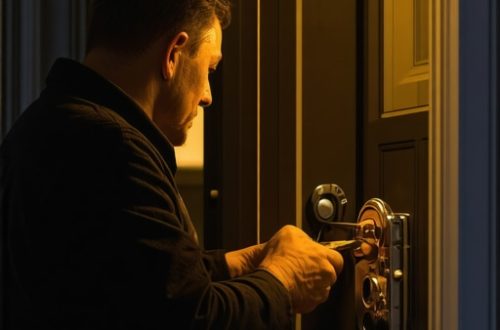
I teach my apprentices that if you have to force the dial, you’ve already lost. A safe is not a door you kick in; it is a mathematical puzzle encased in steel. I have spent 25 years listening to the click of a fence dropping into a gate, and I can tell you that the moment you lose your combination, you are no longer the owner of that box; you are a supplicant. Most people panic. They go to the garage, grab a pry bar, and ruin a three thousand dollar piece of equipment to get at fifty dollars in cash and some birth certificates. That is the behavior of a novice. In my shop, we look at security as a physics problem involving wheel packs, drive cams, and metallurgy. Whether you are dealing with an old-school S&G mechanical dial or a high-tech biometric interface, the physics of the lock remains the same. The internal components are designed to stay in place until the correct sequence of events aligns the gates to allow the fence to drop. If you try to bypass that with brute force, you trigger relockers that will turn your safe into a permanent cube of useless metal. Before you reach for the drill, let’s talk about the reality of non-destructive entry (NDE) in 2026.
“Security is always a trade-off between convenience and protection.” – Industry Axiom
Fix 1: The Art of Mechanical Manipulation
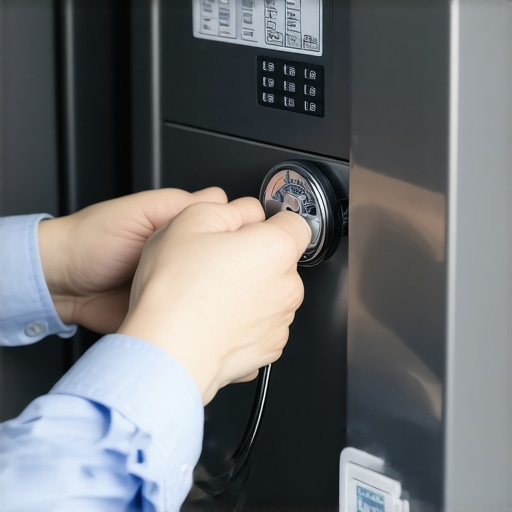
Mechanical safe manipulation is the pinnacle of the locksmith’s craft. It is the process of feeling the internal components of the lock through the dial. In 2026, even with the rise of digital hubs, many high-security safes still use the classic three-wheel or four-wheel pack. Each wheel has a notch called a gate. When all the gates align, the fence drops, and the bolt retracts. To manipulate a safe, I look for the contact points. When you turn the dial, the lever nose touches the drive cam. By measuring exactly where that contact happens, we can map the ‘shadows’ of the wheels inside. This requires a level of tactile sensitivity that you simply cannot get from a YouTube video. We are talking about tolerances measured in thousandths of an inch. Cheap safes from big-box stores use zinc or pot-metal wheels which wear down and create ‘false’ readings. Professional-grade safes use brass or stainless steel. If your safe is feeling ‘crunchy,’ that is a sign of mechanical fatigue, much like the signs you need to change your door locks immediately when they start to catch. Manipulation preserves the safe’s UL rating and keeps your warranty intact, which is why it is the gold standard of NDE.
Fix 2: Digital Override and Management Reset Codes (MRC)
If you have moved into the world of residential keypad locks, your safe likely has an electronic lock. These are essentially small computers that control a solenoid or a motor. The most common reason for a lockout here isn’t a forgotten code; it is a dead battery or a failed capacitor. Most 2026 models are designed with integrated smart lock hubs that can alert your phone when the battery is low, but people ignore those notifications just like they ignore their check engine lights. Every reputable electronic safe lock manufacturer (like La Gard or Sargent & Greenleaf) has a Management Reset Code (MRC) or a Master Code. If you haven’t changed this from the factory default, you are vulnerable. If you have changed it and lost it, we have to look at the logic board. In 2026, we use diagnostic tools that can interface with the keypad port to check the health of the solenoid. If the logic board hasn’t fried, we can often recover the access without a single scratch on the paint. This is why reading residential keypad locks reviews is vital before buying; some brands have ‘backdoors’ that are too easy to find, while others are so secure they become paperweights if the board fails.
Fix 3: The Secondary Mechanical Bypass
Many ‘home’ safes sold in 2026 come with a high-security tubular or dimple key bypass hidden behind a nameplate. This is your safety net, but it is also the first place a burglar looks. I see a lot of budget smart lock starter kits that include these bypasses. The problem is that the lock cylinders in these bypasses are often garbage. They are prone to lock bumping, a technique where a specially cut key is flicked to jump the pins above the shear line. If you are using a safe with a bypass, you need to ensure it features high-tech lock bumping prevention mechanisms. To get you back into your safe non-destructively, we often simply pick this bypass cylinder. A real locksmith uses a Lishi tool or a specialized pick to decode the pins. If you have lost the key and the combo, we can decode the lock, open the safe, and then cut you a new key using a code cutter. This is the same logic we use for transponder chip key cloning 2026 procedures; we are translating physical bits into functional access.
“A lock only identifies the person who has the key, not the person who is authorized.” – Security Manual Rule
Fix 4: Precision Scoping and Fiber-Optics
Sometimes, the internal components have failed. A spring has snapped, or a relocker has fired due to a heavy vibration. In these cases, we use precision scoping. While some might call this ‘minorly destructive,’ in the professional world, it is considered NDE because the safe remains fully functional and its security is restored after the repair. We drill a hole no larger than 1/8th of an inch, usually behind the dial ring or a decorative plate. We then insert a fiber-optic scope to see the wheel pack directly. By watching the wheels turn, we can see the gates align and manually trigger the fence. In 2026, we even have robotic scopes that can manipulate the wheels from the inside. Once the safe is open, we tap the hole, fill it with a hardened steel pin, and it is actually stronger than it was before the hole was drilled. This is a far cry from the ‘trunk slammers’ who will take a circular saw to your safe door and charge you a thousand dollars for the privilege of ruining your property.
Beyond the Safe: Your 2026 Security Perimeter
Opening a safe is just one part of a neighborhood watch lock recommendations report. If you are losing combinations, you might also be neglecting your garage door lock upgrades 2026 or your front door’s integrity. High-tech security is a holistic system. A voice-activated locks setup tutorial might make your life easier, but it doesn’t replace a solid deadbolt with a high-security strike plate. I tell my customers that your safe is your last line of defense, but your first line is your front door. If you are still using the locks that came with your house ten years ago, you are asking for trouble. Modern security involves biometric locks installation guide 2026 protocols that use encrypted templates rather than just a simple fingerprint scan, preventing ‘spoofing’ attacks. Whether it is your car’s transponder, your smart home hub, or your heirloom safe, the physics of protection remains the same: you need quality metal, precise tolerances, and a professional who knows how they work together. Don’t let a scammer with a drill bit tell you otherwise. Real security is built on knowledge, not destruction.


![Snapped Key? 3 Tools to Extract It Without Ruining Your Lock [2026]](https://prolocksmithco.com/wp-content/uploads/2026/04/Snapped-Key-3-Tools-to-Extract-It-Without-Ruining-Your-Lock-2026-75x75.jpeg)