The Lesson Every Apprentice Must Learn
I teach my apprentices that if you have to force the key, you’ve already lost. In 2026, that ‘force’ isn’t just physical torsion on a brass blank; it’s trying to bypass a rolling code on a high-end Electric Vehicle (EV) without the right logic tool. I remember a kid named Joey who thought he could ‘quick-jump’ a 2024 Tesla clone’s proximity sensor. He nearly fried the entire Body Control Module because he didn’t respect the physics of the digital handshake. The same applies to you as a consumer. If you try to force a dealership to give you a fair price, you’ve already lost the game. Understanding the internal physics of your fob is the only way to keep your wallet intact.
The Forensic Autopsy of a Modern EV Fob
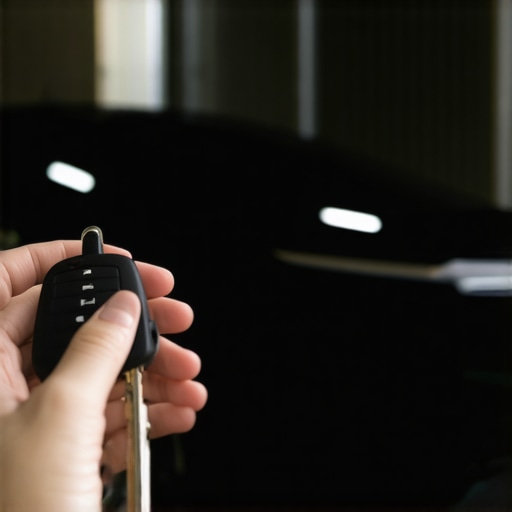
When an EV fob fails, most people hear a dead click and panic. I see a breakdown of Material Science. Inside that plastic shell, you aren’t just looking at a battery. You’re looking at an Ultra-Wideband (UWB) transmitter and a cryptographic processor. The ‘crunch’ you hear when a button fails is usually the collapse of a micro-switch soldered to a multi-layer PCB. Unlike the old zinc-cased remotes of the 90s, these boards use precision-engineered copper traces that can hairline fracture if you drop them on concrete too often. The dealership wants you to believe that this circuitry is ‘magical’ and requires a $600 replacement. It doesn’t. It requires a technician who understands frequency alignment and ECU handshaking.
“Security is always a trade-off between convenience and protection.” – Industry Axiom
Why the Dealership is Your Financial Enemy
The $200 markup you’re trying to avoid isn’t for the hardware. A raw, high-quality OEM circuit board for an EV costs the dealer about $45. The rest is what we call ‘The Software Tax.’ They charge you for the proprietary diagnostic link. However, as an independent shop owner, I have access to the same 433MHz and 315MHz programming interfaces. By searching for automotive key programming near me rather than driving to the shiny glass showroom, you bypass the corporate overhead. We use the same Lishi tools to decode your emergency door lock and the same tablets to perform the rolling code sync.
The Anatomy of the Save: Hardware vs. Logic
To save that $200, you have to diagnose the failure correctly. Is the proximity sensor failing to trigger the ‘handshake’? This is often a signal attenuation issue caused by cheap aftermarket shells that lack proper RF shielding. If you’ve lost wallet key replacement fast needs, do not buy the $15 ‘mystery meat’ fobs from overseas auction sites. Those chips often use substandard oscillators that drift in frequency when the weather gets cold. In our shop, we see these ‘bargains’ fail the moment the temperature drops. The internal crystals simply stop vibrating at the correct hertz, and your car ignores the signal.
“A lock is only as strong as its weakest component, whether that component is a steel bolt or a line of code.” – Security Manual 101
The Commercial Crossover
While I spend my mornings on EV fobs, my afternoons are often spent on panic bar installation and repair for commercial buildings. Why does this matter to you? Because the same logic applies: hardware durability. Whether it’s a Grade 1 exit device or a biometric fob, you are paying for the cycle rating. A cheap EV fob is like a Grade 3 residential lock: it’s made of pot metal and hope. For those looking for high-security euro cylinder locks or anti-pick locks for front doors 2026 models, the goal is always to increase the ‘work time’ for an intruder. With an EV fob, the ‘intruder’ is the dealership’s service writer trying to pick your pocket.
Practical Action: How to Prevent Future House Lockouts and Fob Failures
One of the best ways to save money is to never need the emergency service in the first place. I tell my customers that learning how to prevent future house lockouts starts with redundancy. For your car, this means having a ‘clone’ made while you still have one working key. In 2026, cloning a UWB signal is 50% cheaper than generating a key from a ‘lost all keys’ situation. We also see a rise in smart locks for pet doors and affordable biometric door hardware, which are great, but they all require the same maintenance: clean the contacts and check the voltage. A low battery in an EV fob can cause ‘ghost’ errors in the car’s computer that lead to expensive, unnecessary diagnostic fees.
The Truth About Smart Lock Hacking Prevention Tips
As you upgrade your home with smart lock hacking prevention tips, apply that same skepticism to your automotive security. Always ensure your locksmith is using encrypted programming tunnels. If a guy shows up in an unmarked car with a cheap OBDII dongle, send him away. That is the ‘Trunk Slammer’ special. They might get the car started, but they often leave the door open for ‘relay attacks’ because they didn’t properly close the programming session in the ECU. This is especially true for commercial accounts where key control is everything. Real security involves trust and professional-grade tools like the Lishi 2-in-1, not just drilling out a cylinder because you don’t know how to pick it. Proper lubrication also matters; stay away from WD-40 on your physical locks. Use a PTFE-based dry film so you don’t attract the grit and grime that turns your lock’s shear line into a sandpaper trap.


![How to Cut 2026 EV Key Fob Replacement Costs by 50% [Data]](https://prolocksmithco.com/wp-content/uploads/2026/04/How-to-Cut-2026-EV-Key-Fob-Replacement-Costs-by-50-Data-500x330.jpeg)
This post really opened my eyes to how complex modern EV fobs have become compared to traditional keys. The detail about the circuitry and the importance of frequency alignment highlights the need for skilled technicians rather than just replacing parts blindly. I remember when my older car’s key fob just died and I thought a simple battery change would fix it, but it turned out to be a micro-switch issue. It’s reassuring to know that with the right knowledge and tools, I can save a lot of money instead of paying dealership prices.
One thing I’ve noticed is that many people overlook the importance of RF shielding in aftermarket shells, which can cause signal attenuation issues especially in colder weather. Has anyone here had experience with aftermarket fob shells, and how did that impact their key’s reliability? I’d love to hear some practical tips on choosing durable, RF-shielded options. Also, the idea of cloning signals to prevent future lockouts seems like a smart move—what’s everyone’s take on the security risks involved with cloning keys? Looking forward to your insights!